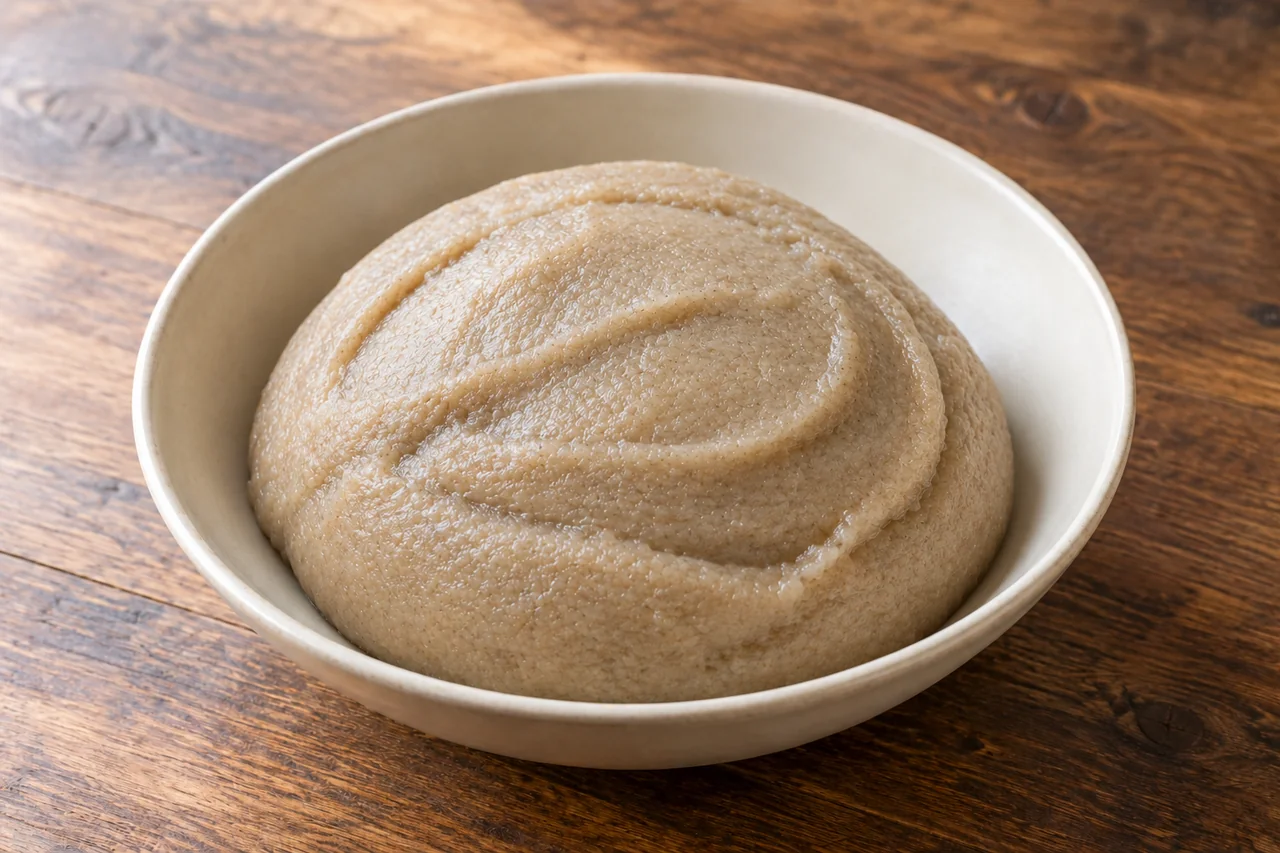
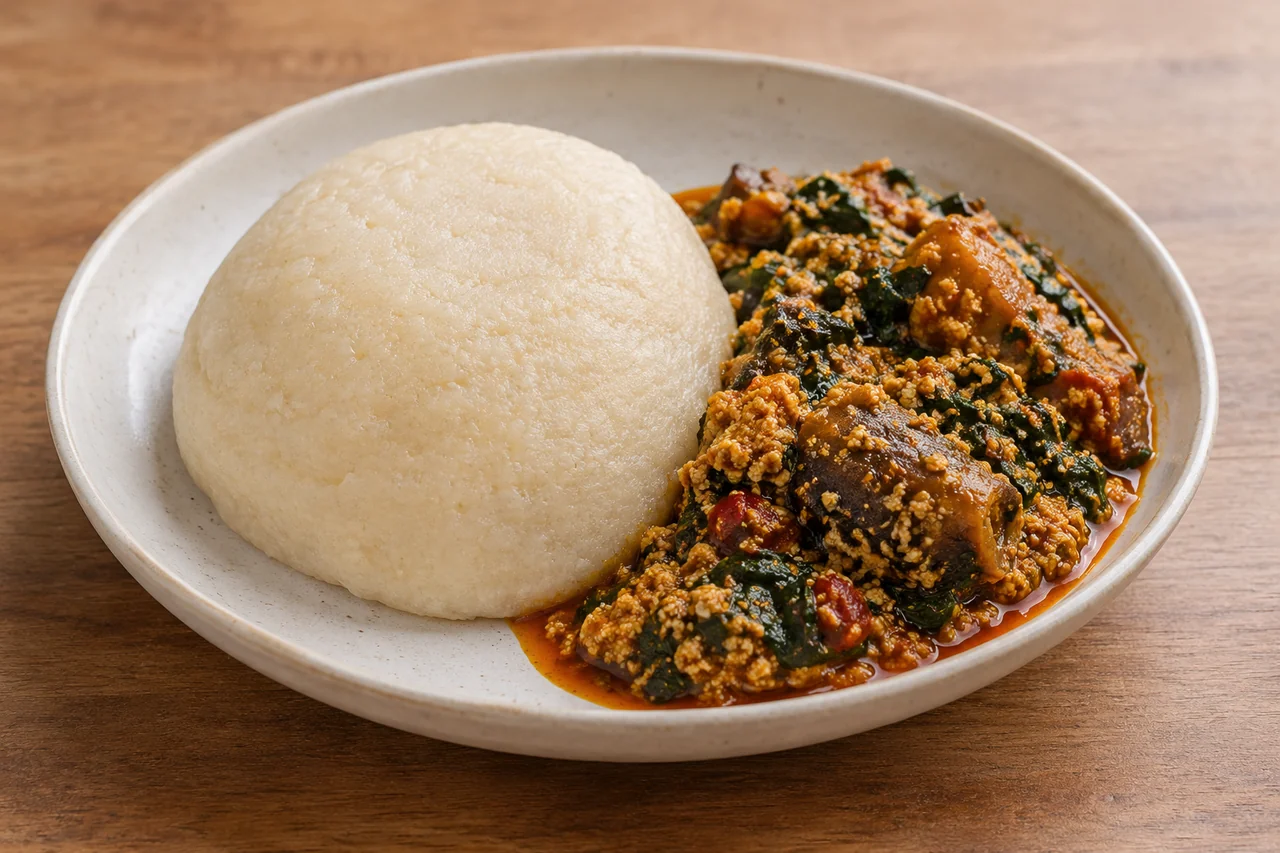
A smooth, firm millet accompaniment for vegetable soups, made with finely milled pearl millet and water.
Millet can arrive at the table as separate little grains or as a soft, cohesive mound. Guda belongs to the latter tradition. Nigerian writer Babagana Abubakar includes it in his account of Kanuri food, while research across the Lake Chad basin distinguishes its fine flour from the coarser grain used for brabusko. The appeal is in that contrast: a mild, warm staple beside a strongly flavoured vegetable soup. This home version keeps the ingredients simple and gives the flour time to cook into a smooth paste.
Cultural context: Babagana Abubakar names Guda in Kanuri foodways. Fieldwork from Diffa, Niger, independently describes guda/tlalaa as a finer-ground millet paste, distinguishing it from coarse-grained brabusko. This is a measured home-kitchen adaptation of that food type using a documented northern Nigerian millet-swallow technique; it is not a claim that every Kanuri household follows this formula.
5 minPreparation
35 minCooking
4Servings
What you’ll need
4 servings
Let’s get cooking
1
Sift the flour into a clean bowl. Do not taste raw flour or dough. Whisk 100 g of the flour with 250 ml cold water until smooth.
2
Bring 600 ml water to a boil in a heavy saucepan. Lower to medium heat and whisk in the slurry. Cook for 10 minutes, stirring frequently; leave the lid ajar and watch for bubbling over.
3
Turn the heat low. Gradually stir in the remaining 200 g flour with a sturdy wooden spoon, pressing and folding to remove lumps. The mixture should gather into a soft mound.
4
Sprinkle 50 ml of the reserved water over the mound, cover and cook over very low heat for 15–20 minutes. Uncover and fold every 5 minutes; add the remaining water a tablespoon at a time only if the paste becomes dry before it cooks.
5
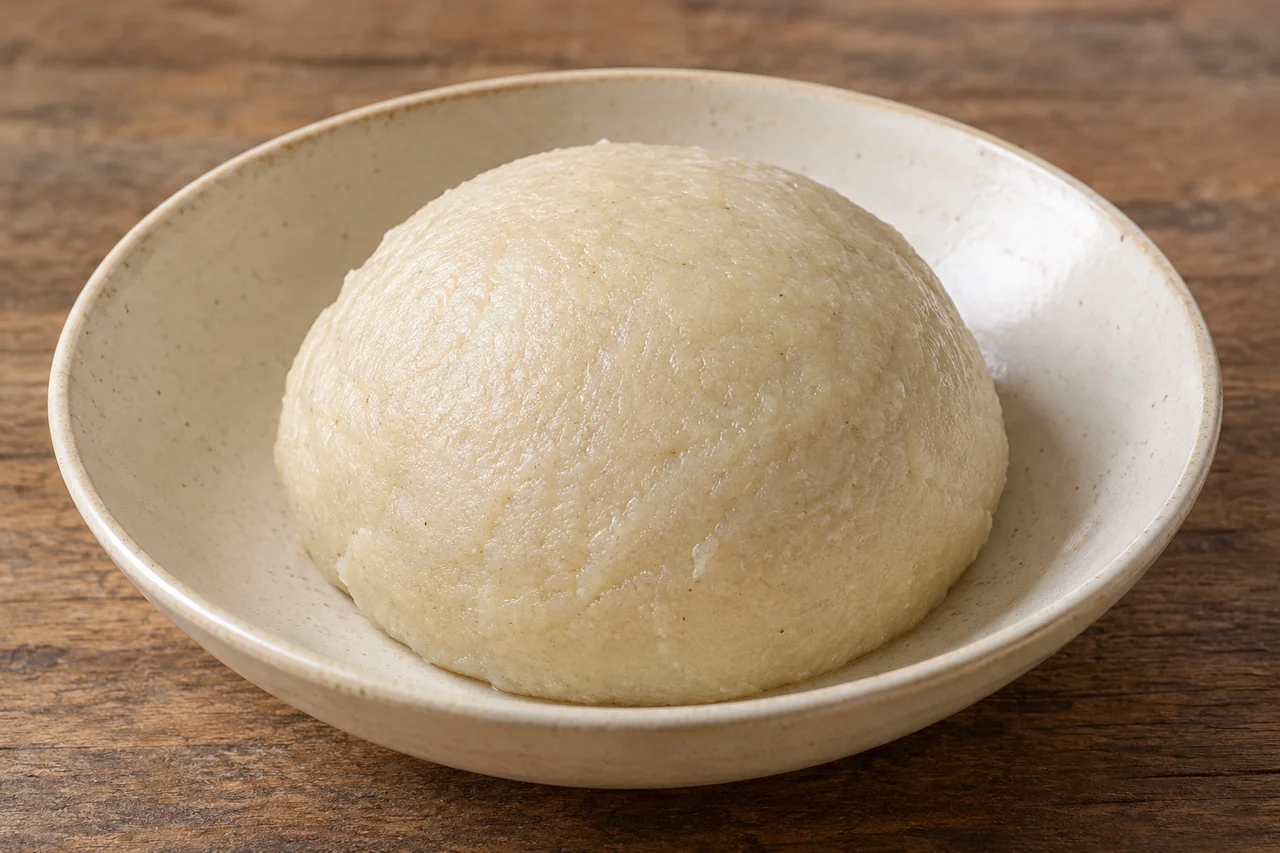
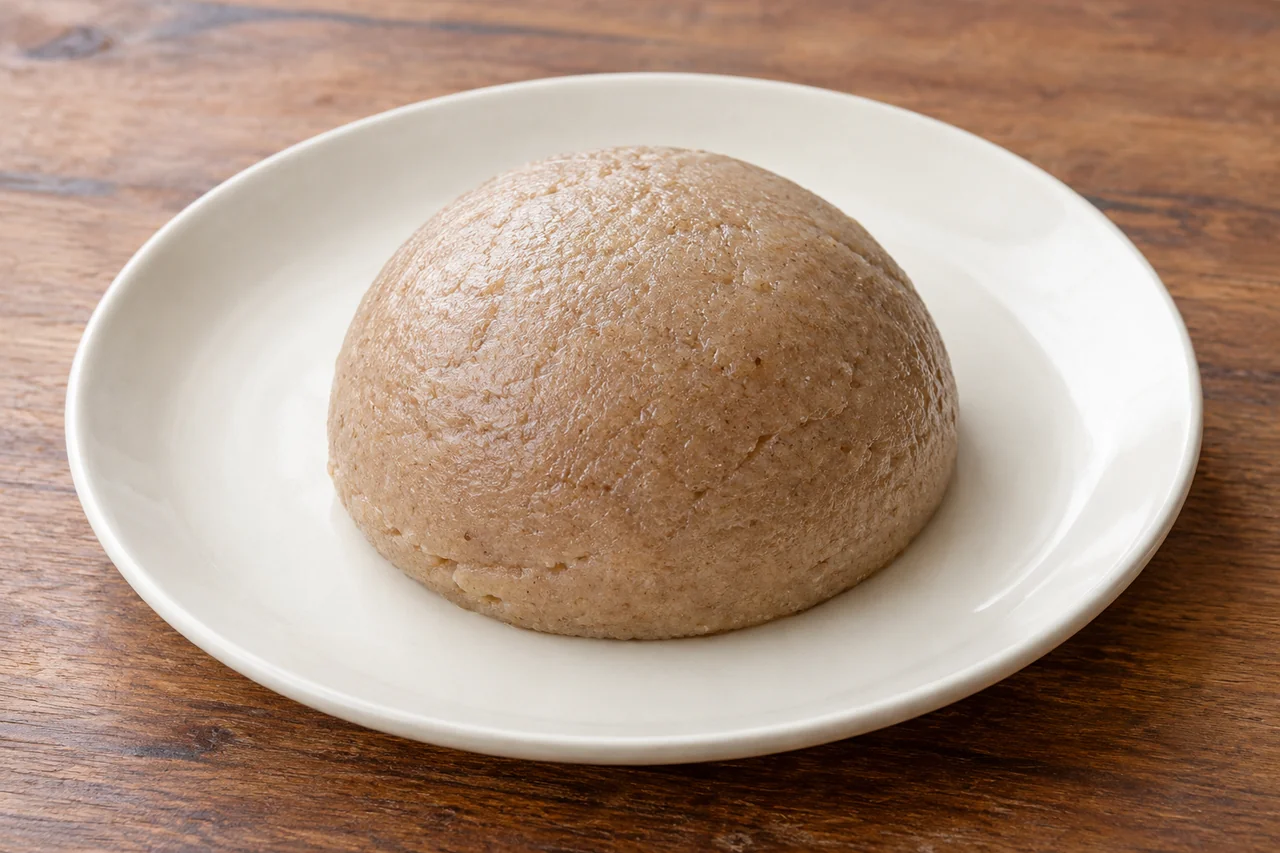
Beat and fold until the paste is smooth, steaming throughout and holds a soft shape, with no dry flour pockets. If needed, cook for a few minutes longer. Use a wet spoon to portion and serve hot with soup.
6
Refrigerate leftovers promptly in shallow containers at 4°C or below, within 2 hours, or within 1 hour above 32°C. Reheat until steaming throughout; do not leave cooked grain at room temperature overnight.
A little kitchen wisdom
Finely milled flour gives a smoother result than whole millet or grits.
Flour absorbs water differently; stop adding flour if the mixture is already too firm, and adjust with small quantities of hot water.
Serve with baobab-leaf, okra or another cooked vegetable soup; accompaniments have their own allergens.
Timing estimate: active preparation 5 min; cooking 35 min; additional passive time 0 min; conservative planning allowance 40 min. Some stages may overlap.
Recipe status: Research formulation; not kitchen-tested.
Allergen checks: No major allergen intentionally included; verify every ingredient and product label.
Recipe notes & sources
Research formulation; not kitchen-tested
Also known as: Guda millet paste
Babagana Abubakar names Guda in Kanuri foodways. Fieldwork from Diffa, Niger, independently describes guda/tlalaa as a finer-ground millet paste, distinguishing it from coarse-grained brabusko. This is a measured home-kitchen adaptation of that food type using a documented northern Nigerian millet-swallow technique; it is not a claim that every Kanuri household follows this formula.

 Chiamaka’s Table



Around the table 0
Be the first to start the conversation.