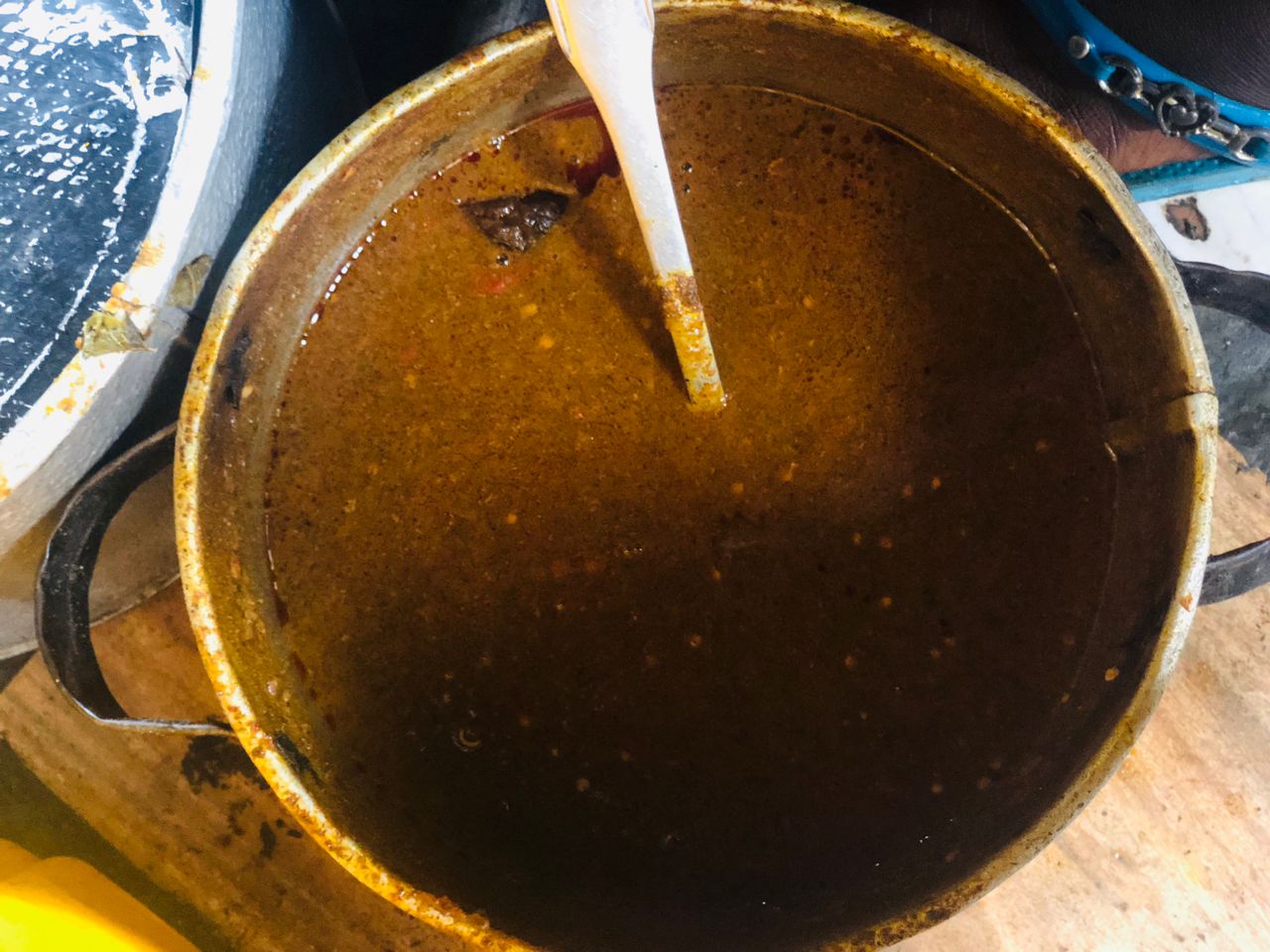
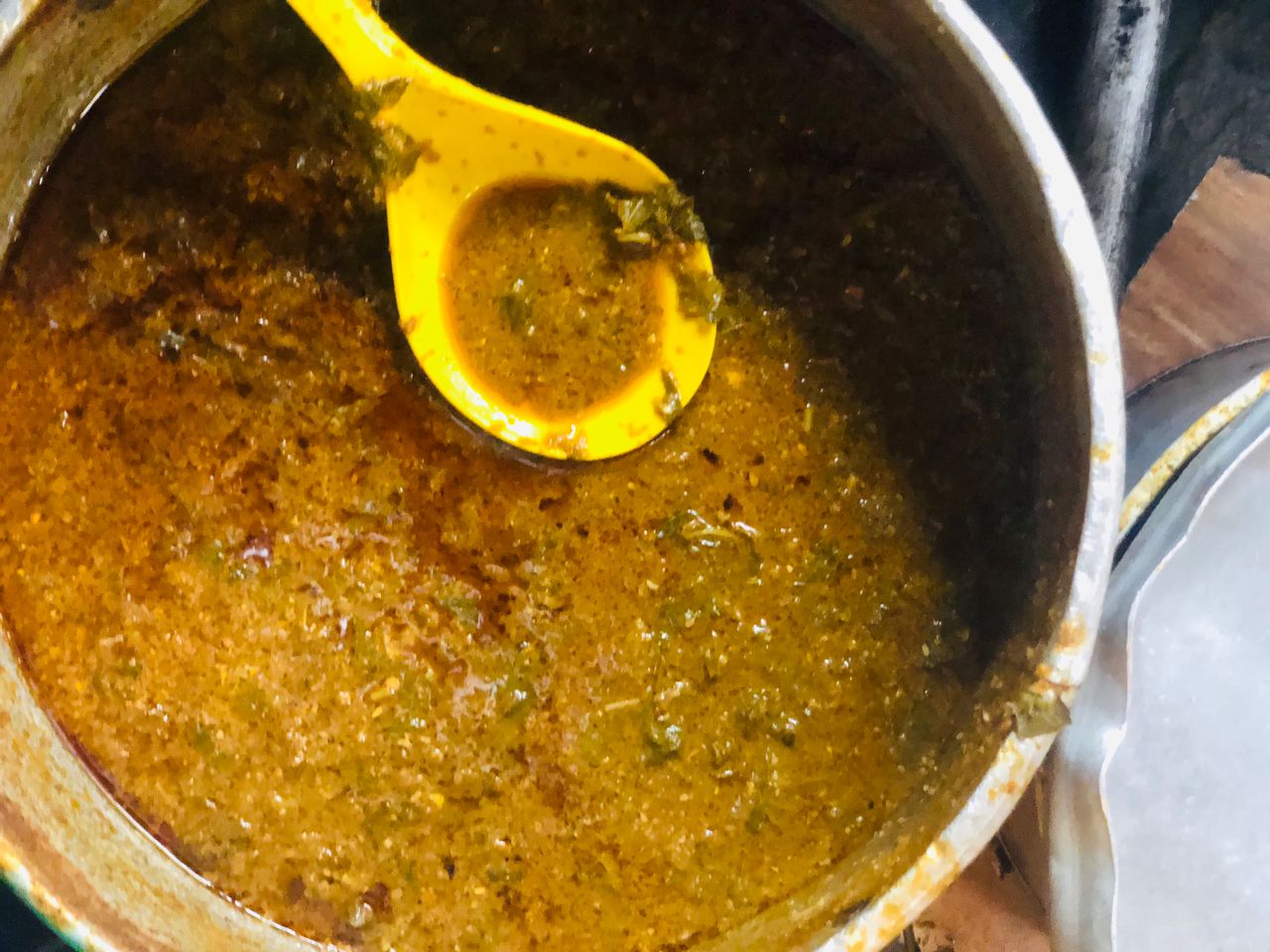
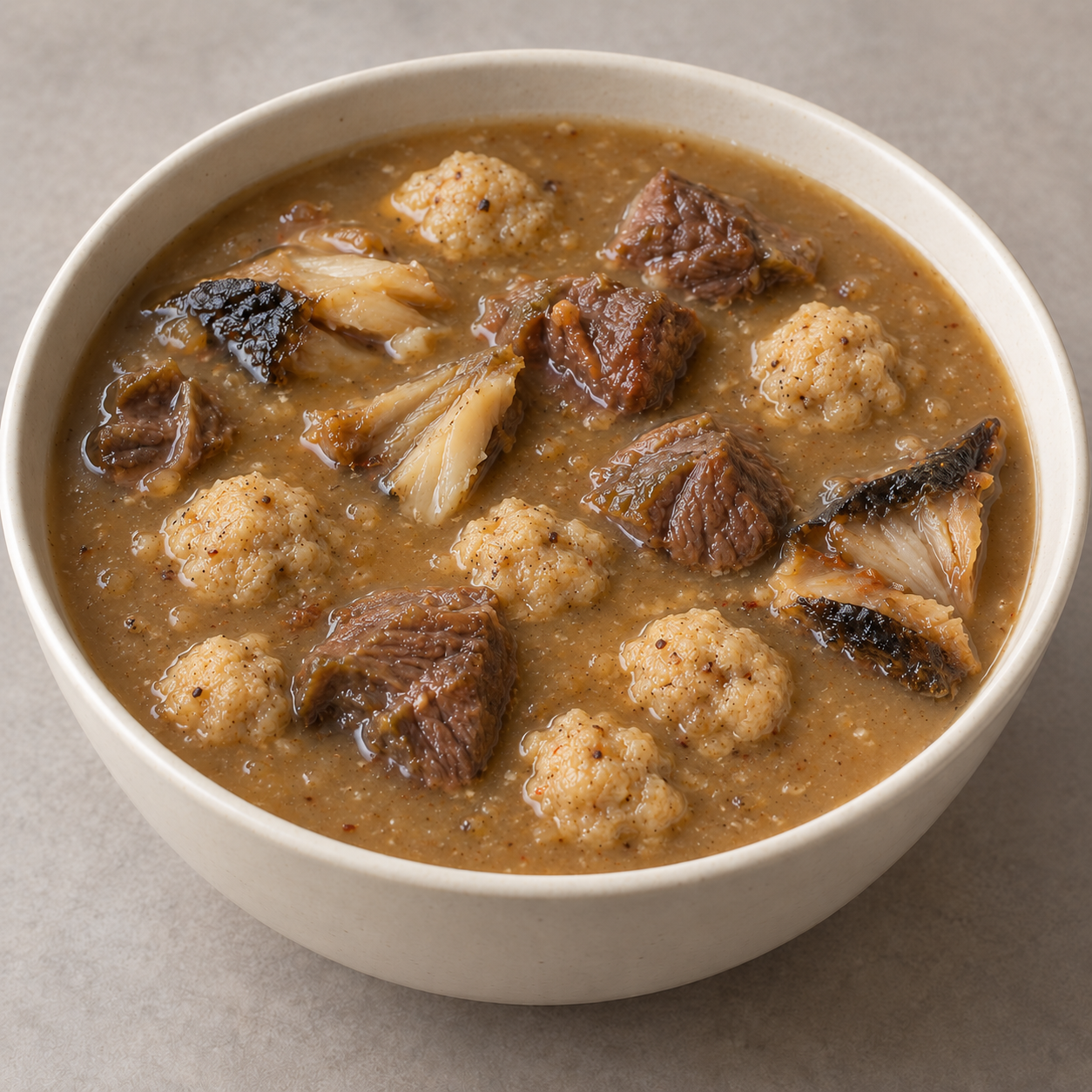
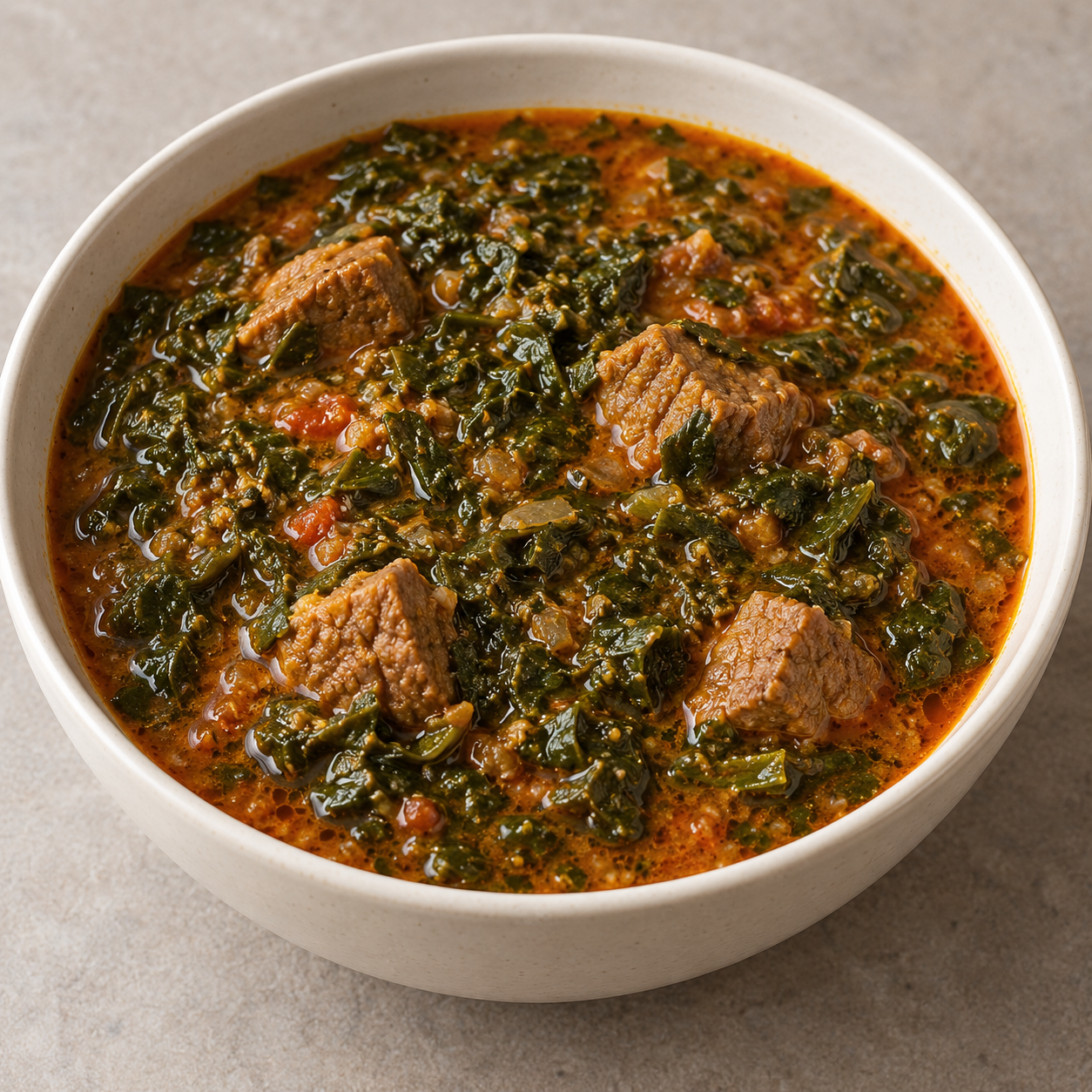
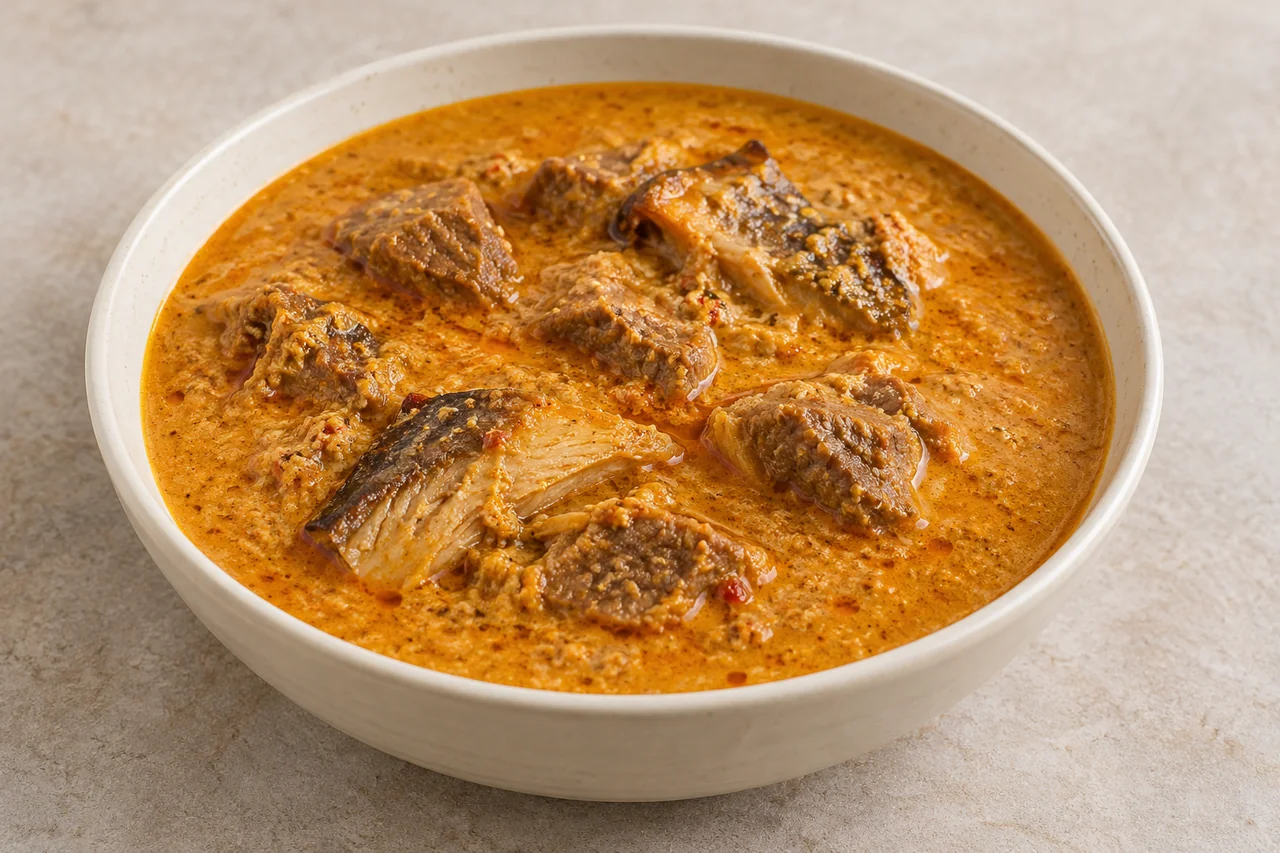
A silky, gently drawing soup thickened with dried baobab leaves, with beef and smoked fish.
The defining ingredient is kuka, powdered baobab leaf. Dried leaves make this distinctive soup possible beyond the fresh-leaf season. Northern households commonly eat it with tuwo, although the choice of oil, meat and fish is far from uniform.
Cultural context: Strongly associated with Hausa cooking, with related baobab-leaf soups throughout the Sahel; oils and proteins vary.
Put beef, onion, salt and water in a pot. Simmer covered for 60–75 minutes, until the beef is tender; replenish evaporated water as necessary.
2
Add fish, palm oil, crayfish, dawadawa and pepper. Simmer for 10 minutes. Lift the meat and fish into a bowl so they will not obstruct mixing.
3
Check that about 800–900 ml of liquid remains; add hot water if needed. Turn the heat very low and sprinkle in the sifted kuka a little at a time, whisking briskly.
4
Simmer gently for 5 minutes, stirring along the base. Return the meat and fish and heat for 3–5 minutes. Adjust salt and loosen with hot water if necessary.
5
Serve with tuwo shinkafa or tuwo masara. The soup should flow from a spoon with a slight stretch.
A little kitchen wisdom
Kuka is baobab leaf powder, not the pale powder made from baobab fruit
Whisking the powder into a clear broth helps prevent dry lumps
For a groundnut-oil version, replace the palm oil and disclose the peanut ingredient
Timing: active preparation 20 min; cooking 100 min; additional passive time 0 min; conservative planning allowance 120 min. Some stages may overlap.
Recipe status: Research draft; not kitchen-tested.
Allergens and checks: fish; crustaceans
Recipe notes & sources
Research draft; not kitchen-tested
Also known as: Miyar kuka, Baobab-leaf soup
Strongly associated with Hausa cooking, with related baobab-leaf soups throughout the Sahel; oils and proteins vary.

 Hadiza’s Pot





Around the table 0
Be the first to start the conversation.