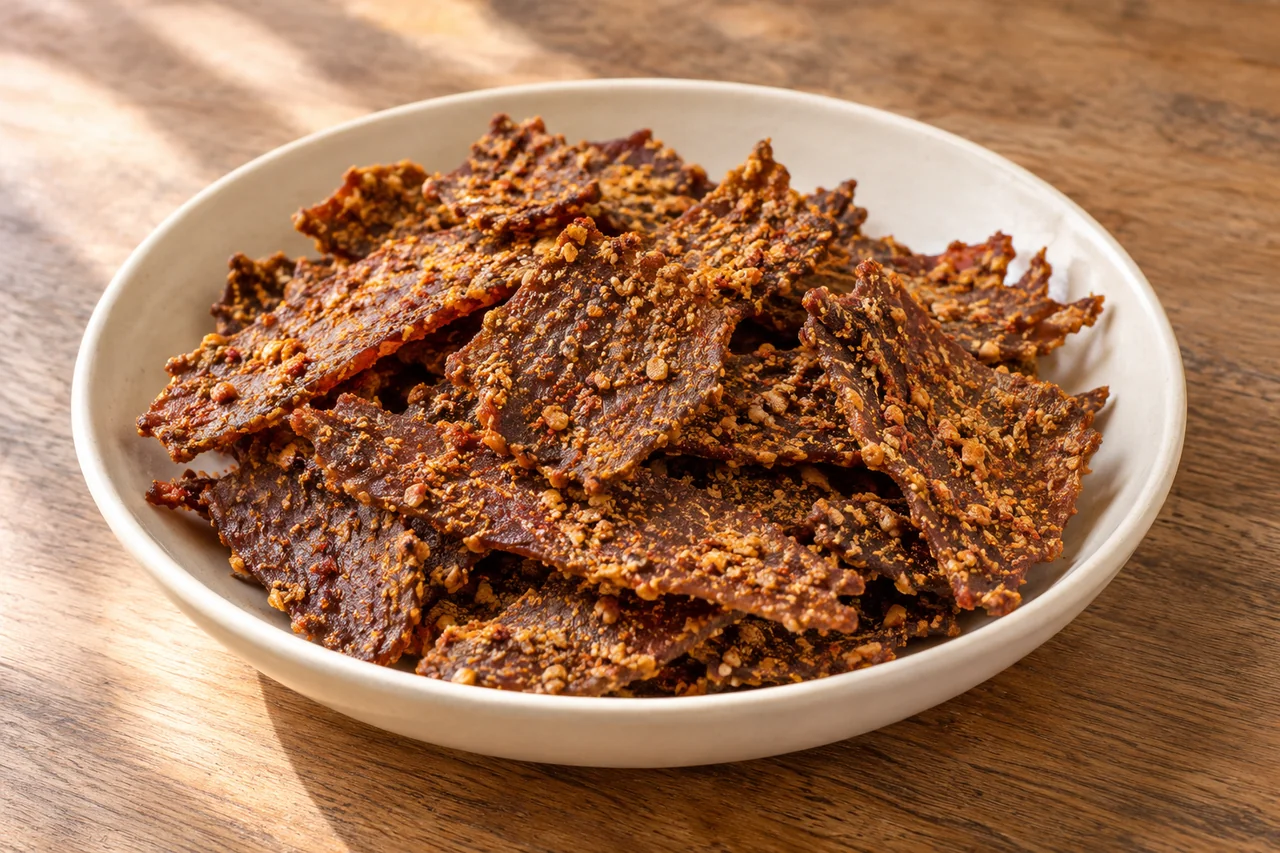
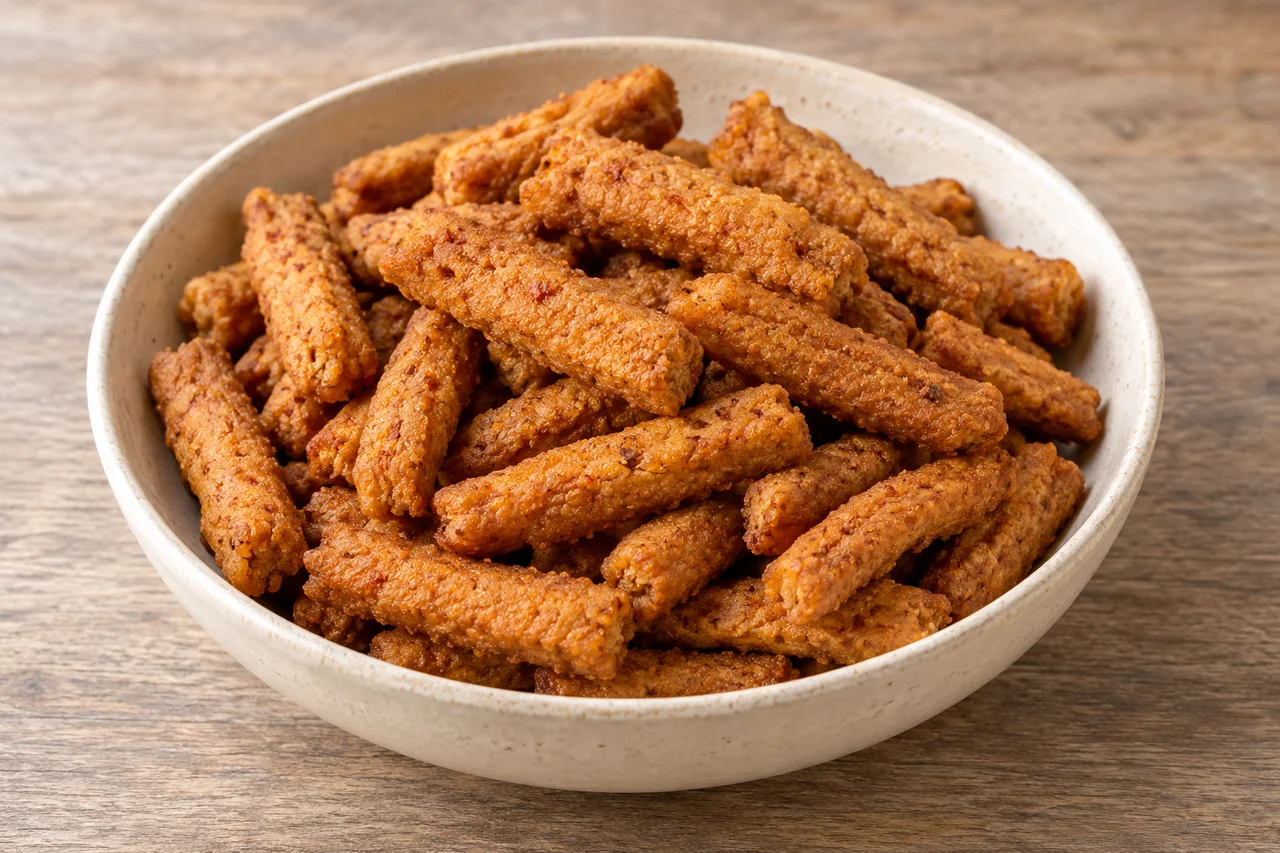
Thin, lean beef with a hot groundnut-spice coating, heat-treated before drying and briefly roasted to finish.
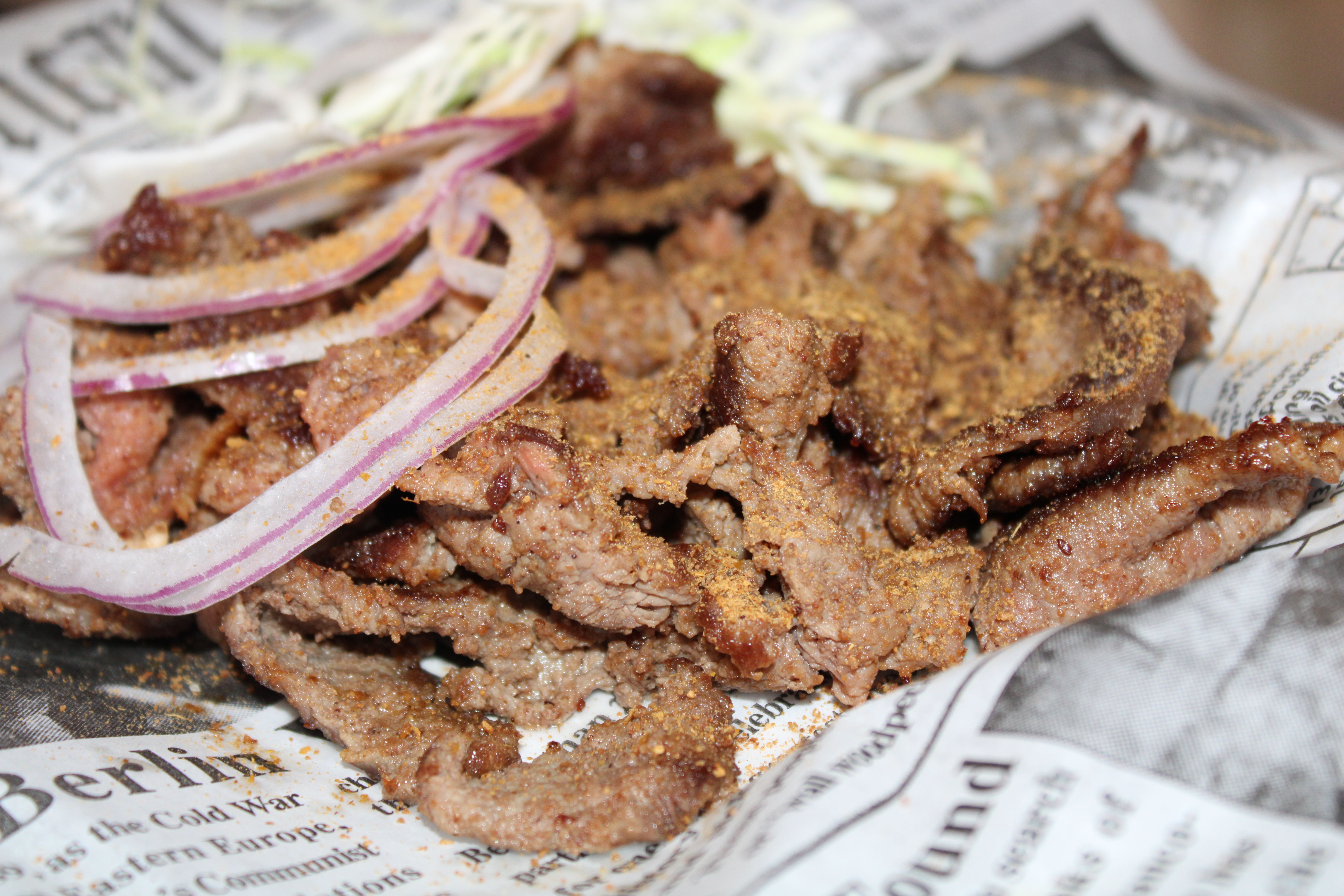
Kilishi turns thin sheets of meat into a concentrated, spice-covered snack. Nigerian food writer Flo Chinyere demonstrates an oven version, while research on production describes the groundnut coating that gives the meat its characteristic finish. It belongs beside, rather than inside, the recipe for suya: the very thin cut and drying stage create a different texture. This home adaptation keeps those defining features while adding a measured heat-treatment step and refrigerated storage instead of making a shelf-life claim.
Cultural context: Documented across northern Nigeria; this is a safety-adapted home version, not a claim to reproduce a particular commercial maker.
Chill the beef in the freezer for about 30 minutes until firm but still sliceable. Cut across the grain into broad, even sheets about 2 mm thick. Keep chilled while preparing the steamer and drying racks.
2
Heat the steaming water to a steady boil. Spread beef in a single layer in a covered steamer, in batches. Heat the moist meat to at least 71.1°C throughout; check several thicker strips with a thin-probe food thermometer. Do not substitute a fixed time or surface colour for this check.
3
With clean utensils, transfer the cooked strips to clean racks over trays. Dry in an oven maintained at 70°C, checking its temperature with an oven thermometer, for about 2–4 hours. Turn occasionally. The strips should become leathery with no visibly wet patches; thickness and oven ventilation change the time.
4
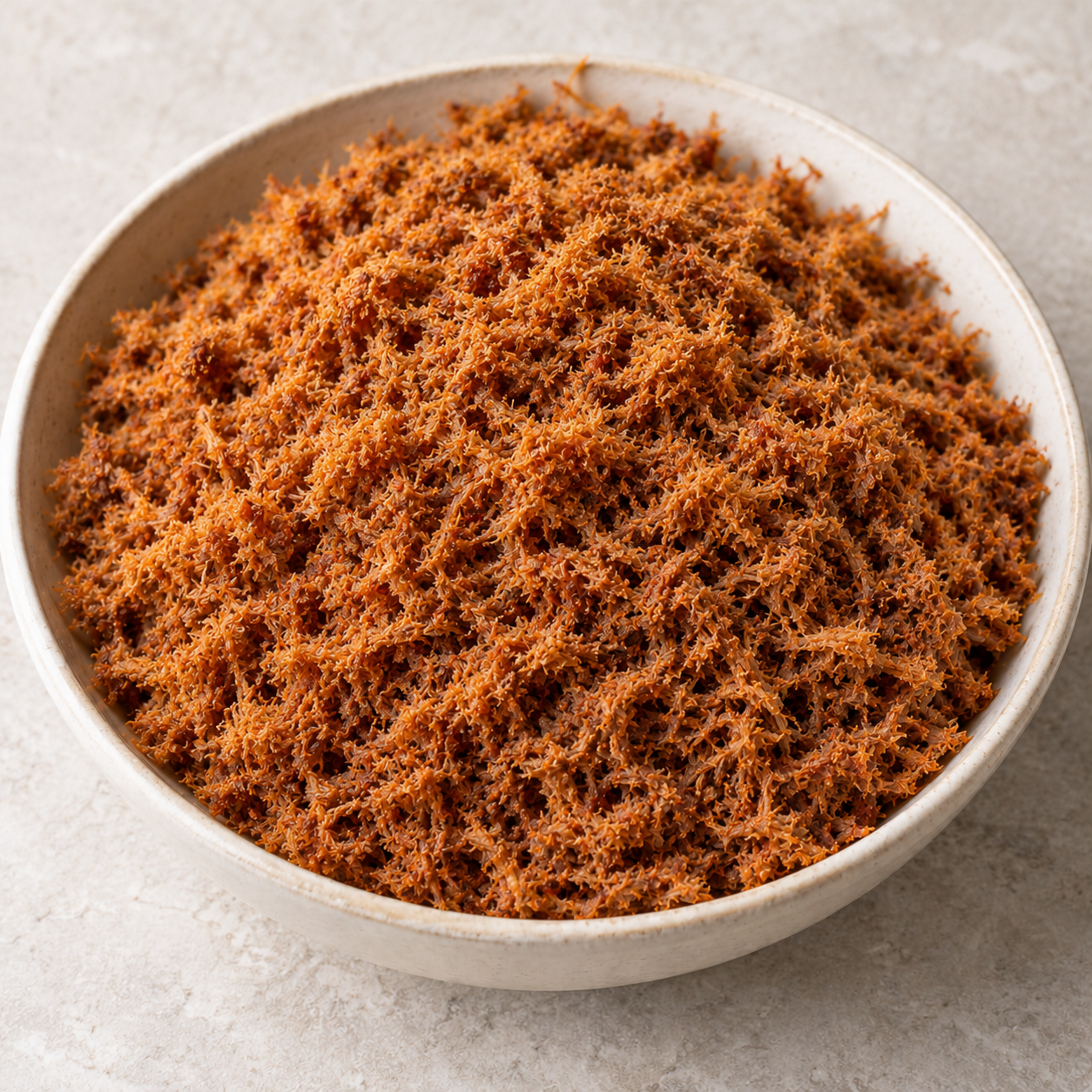
Mix peanut flour, ginger, garlic, cloves, cayenne, bouillon, salt and 120 ml water into a thin spreadable coating. Brush over both sides of the warm dried meat using a clean brush.
5
Increase the oven to 160°C. Roast for 10–15 minutes, turning once, until the coating is set and dry. Watch the edges closely; groundnuts burn readily. If still tacky, finish drying at 70°C rather than scorching it.
6
Cool on a clean rack and serve. This unvalidated home process does not establish shelf stability: refrigerate promptly in a closed container, use within 3–4 days, or freeze.
A little kitchen wisdom
Use a thermometer suitable for thin meat; if you cannot verify heat treatment, do not make home-dried meat
Use commercially roasted peanut ingredients, never mouldy groundnuts
Drying time is an allowance, not a validated moisture or water-activity specification
Timing estimate: active preparation 30 min; cooking 285 min; additional passive time 30 min; conservative planning allowance 345 min. Some stages may overlap.
Recipe status: Research formulation; not kitchen-tested.
Allergen checks: Peanuts
Recipe notes & sources
Research formulation; not kitchen-tested
Also known as: Kilichi
Documented across northern Nigeria; this is a safety-adapted home version, not a claim to reproduce a particular commercial maker.

 Musa on the Grill





Around the table 0
Be the first to start the conversation.